

Mosexuality, Identity, and Biphobia
Jace gives a crash course on Bi+ terminology.

Recently, we got a handful of messages in a row asking about the same thing: What is monosexuality? How does monosexism work? But what about people who claim a monosexual identity label without actually being monosexual themselves?
Confusion can cause big stumbles in the movement, especially when it’s all bundled up in heated discourse. So, while we do cover and define a lot of these big terms in our very first season of Bisexual Killjoy, let’s take a minute to discuss these terms in detail.
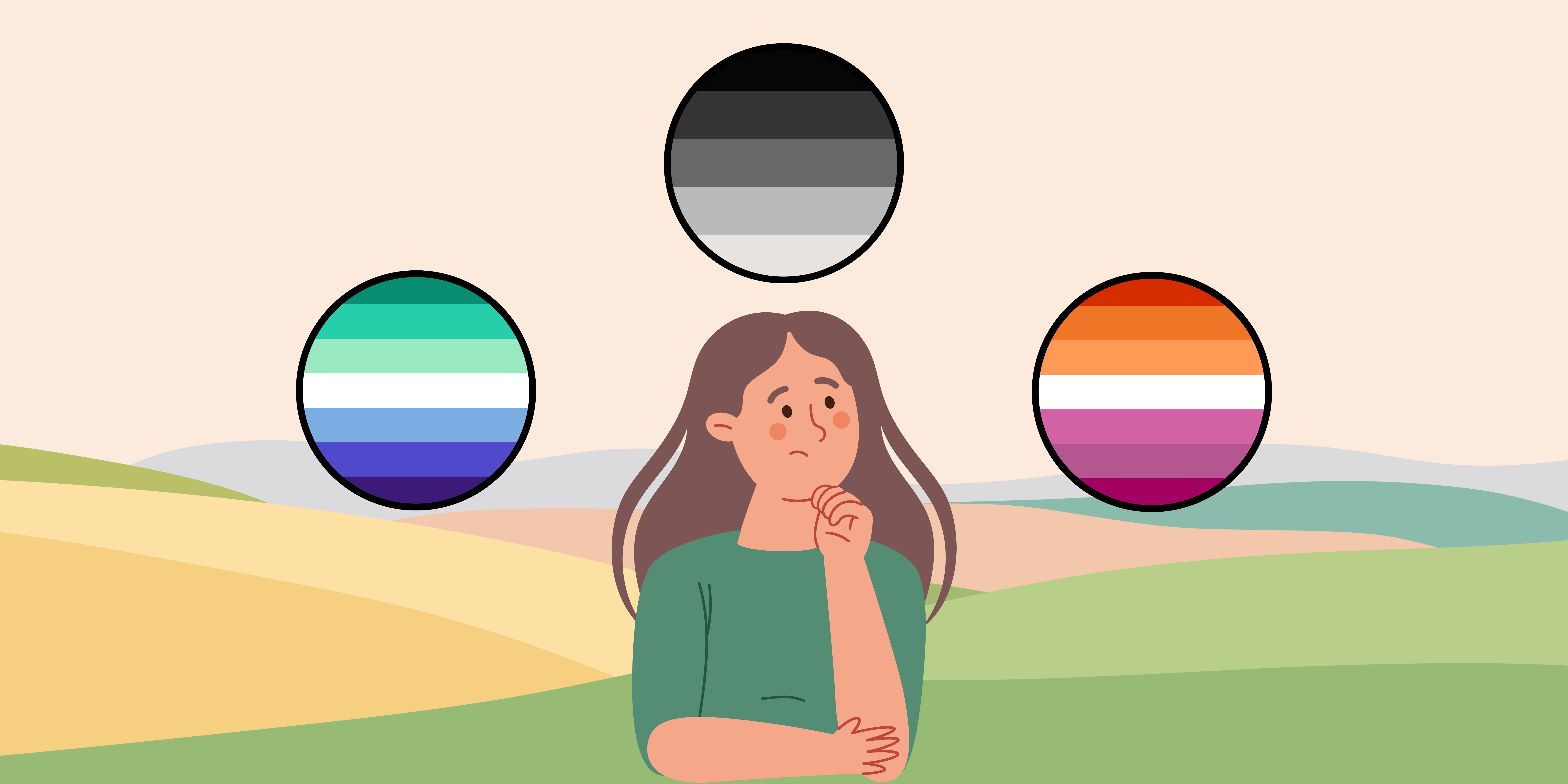
Mono = one
So a monosexual, or monosexuality, refers to sexual attraction to one of the following: genders similar to your own, or genders unlike your own.
By extension:
Monosexual (adj.) Describes someone that experiences exclusively one kind of attraction (to genders like their own, or genders unlike their own). Monosexual can also be used to describe a sexuality that denotes exclusively one kind of attraction.
Monosexuality (noun) A sexuality that is defined by exclusively one kind of attraction to genders like one’s own, or gender unlike one’s own. (i.e. homosexuality, heterosexuality.)
These are descriptors and categories with zero emotional charge or inflection. These are not insults, slurs, or anything of the sort. These are (mostly) academic terms used to describe particular things as they become relevant in the literature/study/research.
Now, the reason we use these terms in the first place is because of the straight/gay binary. We cover this in greater detail in our episode on Bi-erasure, but here’s the cliffs notes:
There is a general, common-knowledge consensus on the straight/gay binary. Straightness sets what is “normal” and expected, while gayness takes an inverse approach to this expectation.
This binary permeates our very understanding of what can and cannot exist in our collective consciousness. As such, the straight/gay binary does not allow for non-monosexual alternatives to exist.
This means that any attempt of recognizing or naming any kind of non-monosexuality results in active, deliberate eradication of the known consciousness.
In the case of bisexuality, we call this bi-erasure. When people say or do things that emphasize the following:
Bisexuality doesn’t exist- or if it does, it’s only a temporary state.
Maybe some people are bisexual, but not you specifically.
Even if bisexuality does exist, it is a delegitimized identity that cannot be respected.
The straight/gay binary has such a strong grip on us, that it feels impossible to escape. If someone isn’t straight, the automatic assumption is that they’re gay. This is because the straight/gay binary exists within another binary: the monosexual / non-monosexual binary.
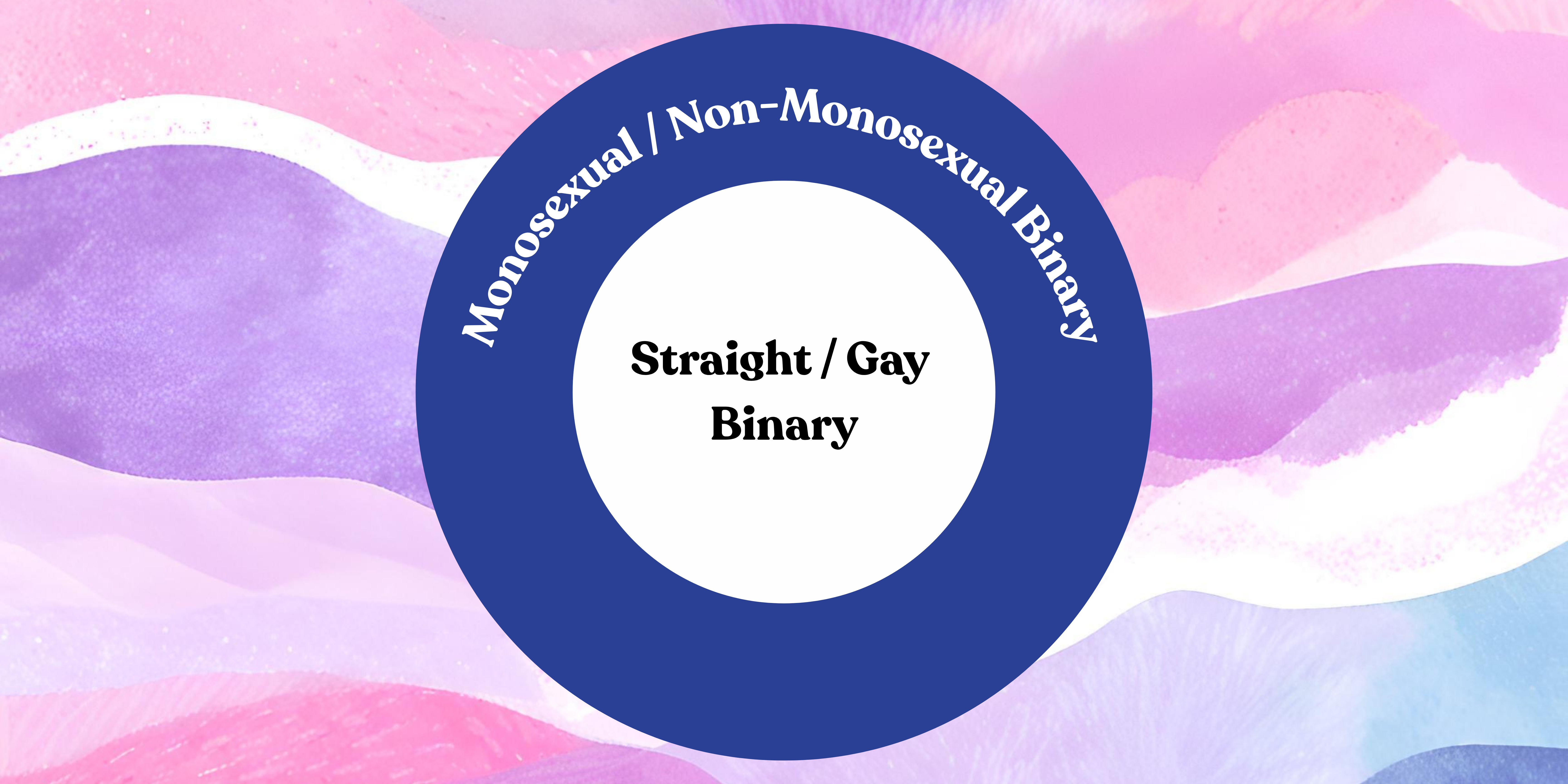
Monosexual people who fit within the straight / gay binary hold specific kind of privilege within the monosexual / non-monosexual binary.
A quick sidebar to talk about privilege
Recap: Privileges are unearned benefits that are available to dominant groups. These dominant groups rely on such benefits to acquire resources, power, and to reacquire their privileges. These privileges are also invisible to those who have them.
No individual is wholly privileged or wholly oppressed. Talking about privilege is an uncomfortable experience, especially when our privilege is masked due to our particular positioning. Gay and lesbian folks may feel a strong resistance to even name that they have privilege within the monosexual / non-monosexual binary.
This is a gentle invitation to lean in. We’re not calling anyone out here. We aren’t “punching up” or assigning blame. This is neutral information for us to go about our lives knowing a little more about the social world around us.
Monosexuality, whether that’s heterosexuality or homosexuality, has been the epicenter of sexuality discussions. It doesn’t matter if it’s about sexual health, sexual pleasure, or identity- the discussion will revolve around a monosexual default.
This is monosexism. The assumption that the only sexualities worth talking about are monosexualities. That discussions around any kind of non-monosexuality are unnecessary or irrelevant.
Sure, straightness had the main monopoly on sexuality discussions for quite some time. However, as we fight for inclusivity and gain some wins, we can clearly observe how this sexual diversity really means monosexual diversity.
Books with Bi+ educational presentation are difficult to find. The research still focuses overwhelmingly on monosexual populations. And the resources that are most widely available are monosexual resources, typically lacking any sort of competence around non-monosexual specificities.
This is where monosexual privilege lies. In the knowledge that, as research and resources expand, they will always include monosexual perspectives.
By contrast, non-monosexual perspectives are constantly challenged. They have to “prove” they aren’t being represented by monosexuality. It isn’t simply a given that non-monosexual perspectives also merit study and insight—we have to write five whole pages solely on why our perspective might differ from monosexual ones.
Queer resources and hotlines aren’t knowledgeable in non-monosexual experiences. We risk being re-victimized and experiencing more harm when we ask for help.
Picking up a “queer representation” book and knowing at least one of the stories depicted will represent yours is the privilege. The “I don’t even have to question that this is for me” moment is the privilege.
By contrast, non-monosexual folks do not share this experience. In fact, we often pick up the same “queer representation” books in hopes of seeing ourselves reflected, only to find we aren’t in the book at all. Not a mention. Not a peep.
Non-monosexuals are the minority of the LGBT minority. (In this case, a minority in terms of social minority regarding power and access.)
And in this context, considering the extent of monosexism, yes, monosexual people do have privilege.
Because compared to them, non-monosexuals have to work twice as hard to get half as far.
Now, to the questions sitting in our DMs
Are the terms monosexual/monosexism oppressive?
No, they are not. Monosexuality describes a kind of attraction. Monosexism is the overall paradigm that leads us to believe that the only sexualities worth prioritizing are monosexualities.
What are your thoughts on people who are attracted to multiple genders but still identify with a monosexuality?
This question is trickier. The definition of bisexual that I use in my everyday life is “attraction to genders like mine and genders unlike mine.” That means that the “bi” in bisexual does, in fact, mean two. But as in two kinds of directions, not two genders. I’m partial to this definition because of its expansiveness, and it honors our Bi+ history of fluidity and acceptance.
I also believe that, at the end of the day, we choose the community we wish to cultivate. Some people may feel attracted to multiple genders, but still choose to adopt a monosexual label. That’s fine- that’s their own choice. Getting involved in their chosen community is their own right.
I don’t think we should hold any opinion over what another person with complete agency has chosen to identify as. Their label is their own, and they have chosen their community.
Our hyper-individual experience is one we are allowed to have without constantly dodging others’ opinions. If you say you’re Bi+, I will believe you. If you say you’re gay, I will believe you. That’s the end of it.
What is the role of monosexual-identified people (but who still experience attraction to multiple genders) in Bi+ activism?
The same role all monosexual people have in Bi+ activism: spending their privilege by advocating for Bi+ inclusivity. Allowing Bi+ people to be heard in meetings, town halls, and conferences. Ensuring their orgs have Bi+ specific resources. Not talking over Bi+ people when they call out a problem.
There is a place in the movement for everyone, including monosexual-identified folks.
At the same time, monosexual-identified people should not speak over (or for) Bi+ identified people. Regardless of the specificities of a person’s particular attraction.
___
Here’s the key takeaway, folks: monosexism is a real thing that actively seeks to erase non-monosexual people out of existence. It’s something that we have to navigate every day, and it’s exhausting. It’s not oppressive to name the structures that are perpetuating the oppression.
You get to choose your communities. It comes to a point where it’s a lot less about “whether or not I belong” and a lot more about you choosing to make this community your own. When our fight becomes your fight, you’re one of ours.
Some people choose to distance themselves from the Bi+ movement, and they have the right to choose that. Maybe they don’t share our experience, or they don’t feel seen here even if they technically meet the basic criteria– they can still choose.
You’re here with us because you’ve allied yourself with what we stand for, and hopefully this work makes you feel seen. That means you’re one of us. So let’s go hand out some Bi+ stickers! We’ve got work to do!
With love,
Jace
Was there something that resonated with you about this post?
Have a question or situation you could use advice on?
Share your story with us to be featured in our advice column Give It to Me Bi+!
Looking to send us a direct message?
Slide into our DMs with the link below