

Give It to Me Bi: Does This Even Count?
At this point, we're professional bisexuals. Give It To Me Bi is a bi-weekly advice column in which your favorite Bisexual Killjoys answer your questions about being bi+.

Q.
Dear Bailey & Jace,
I’m a bi demiro ace (oriented/angled), and I’m struggling to feel connected to my bi identity and community. I experience very little romantic or sensual attraction, and what I feel most strongly is aesthetic attraction, which can be intense but is often dismissed as “not enough” to count as queer. Since my attraction is rare and not something I want to act on, I keep feeling like a fraud for claiming a bi label at all. How do I feel more connected to my bi identity and community when my attraction doesn’t look like what people expect? How do I stop feeling like a fraud?
Sincerely,
Feeling Like a Fraud
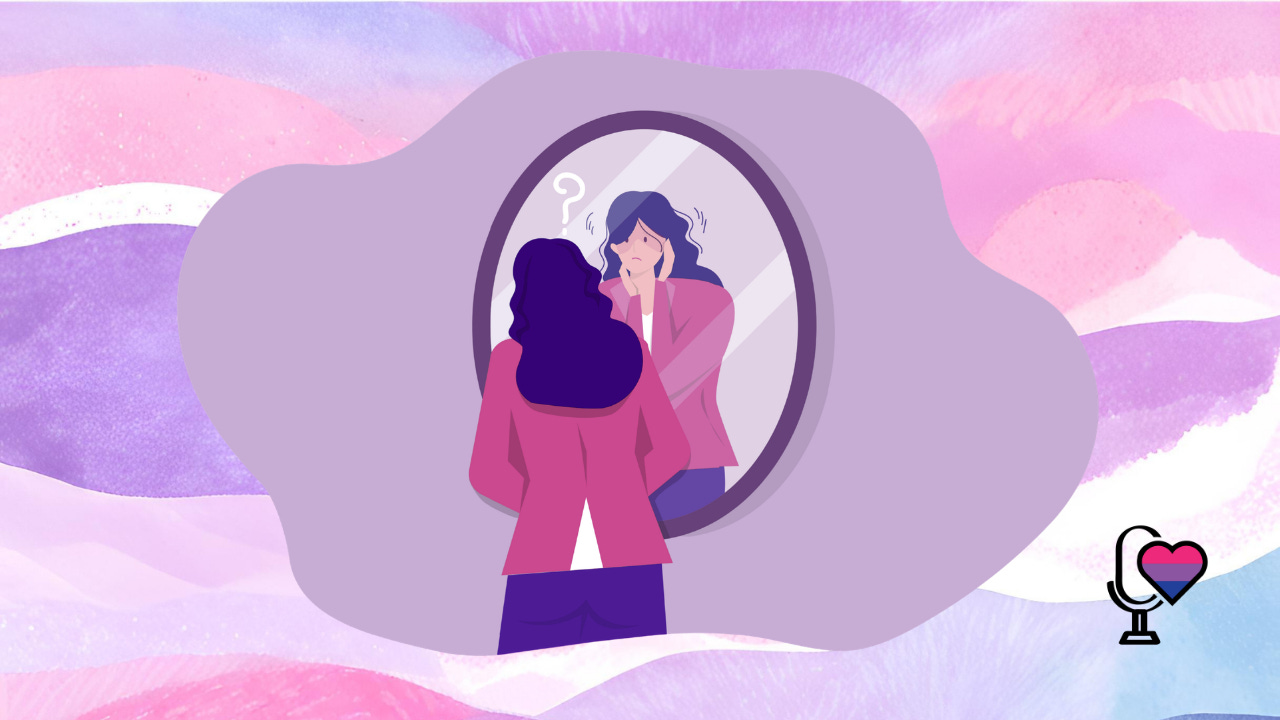
A.
Dear Feeling Like a Fraud,
Okay, before we even get into it, I just gotta say (and hope you believe me when I do): you are not a fraud.
Allow me to put my Mr. Rogers sweater on so we can get cozy about this. What you’re describing is a real orientation pattern, real attraction. Just because that doesn’t look like the most culturally legible version of “bisexuality” (and what does that look like?) doesn’t make it fake. That said, I’ll be the first to admit that I’m not an expert on asexuality, so give me a little grace as I navigate this conversation.
One of the problems we have inside the bi+ community is that, in a lot of ways, we’ve internalized the same hierarchy of attraction that the broad culture has. Sexual attraction sits at the top. Romantic attraction usually follows. Then, everything else (sensuality, emotional connection, aesthetics) gets treated like a footnote.
But that hierarchy isn’t neutral. It’s built around allosexual, alloromantic norms. If your attraction doesn’t center sex or frequent romance, it gets downgraded. That doesn’t mean it’s lesser. It means the framework wasn’t built with you in mind. Sounds pretty bisexual to me (I’m being glib, but hopefully you get what I mean).
You also named something important in your letter: potential. Plurisexuality has always included potential attraction. Not guaranteed or equally distributed or constantly active. No, it’s potential. Look no further than Robyn Ochs’ definition of bisexuality for confirmation on that.
When you realized that romantic attraction itself is rare for you, it didn’t suddenly erase the direction of that attraction. If the rare spark could happen with more than one gender, that’s meaningful data. Low frequency doesn’t equal low legitimacy.
But let’s talk about aesthetic attraction for a minute (which, admittedly, I had to read into before responding to your letter). After I confirmed what I thought to be true, I understood.
You’re totally right that aesthetic attraction can be intense. It can feel magnetic. It can feel embodied. It can feel like being pulled toward someone rather than just admiring them from afar. And it’s minimized, either absorbed into allosexual queerness when convenient, or dismissed as “just aesthetic” when an aroace person names it. That dismissal isn’t about the truth. It’s about discomfort with attraction that doesn’t follow the expected script.
You don’t owe anyone a version of bisexuality that is actionable, consumable, or narratively legible. Attraction does not have to culminate in dating, sex, or partnership to be real. Desire does not have to be frequent to count. Orientation is about pattern, not performance.
Now, the harder part: connection.
If you’re looking for community that centers sexual or romantic experience as the primary marker of bi+ identity, you may continue to feel out of step. That doesn’t mean you don’t belong. It may mean you need spaces where ace-spectrum and oriented/angled identities are explicitly understood as bi. It also might mean that you have to be the one to hold that space and let other people find you. As someone who’s spent their life making space for other people, I know that might suck to hear. But it feels pretty great when someone else finds you and says, “I’ve been looking for something like this my whole life. Thank you.”
I’d encourage you to experiment with this shift: instead of asking, “Am I bi enough?” try asking, “What does my bi experience actually look like?” If your attraction moves across gender lines, that is a bisexual pattern. If you feel yourself drawn in ways that aren’t constrained by gender, that is a bisexual reality.
Babe, I promise, you don’t have to justify anything. You’re allowed to claim a label because it helps you understand yourself, not because you meet someone else’s quota of experiences.
Stay inconvenient,
Bailey
Was there something that resonated with you about this post?
Have a question or situation you could use advice on?
Share your story with us to be featured in a future Give It to Me Bi+ entry!