

Bi+ People Were Here
What Creating Change taught Bailey about belonging, erasure, and showing up anyway.

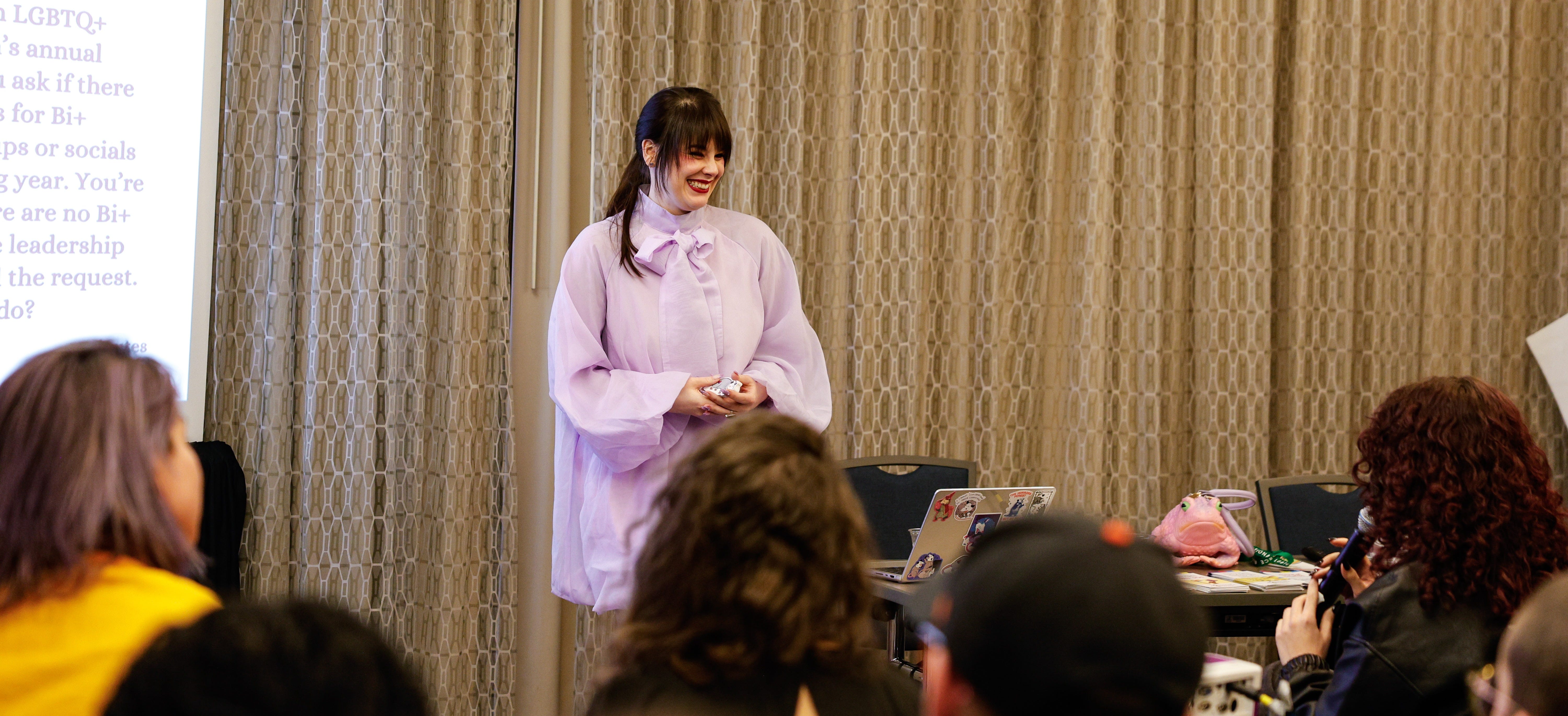
Jace and I try to approach our work with as much transparency as we can because it’s easier to ask for help and build community when you’re open about how you operate. Which means I need to be honest with you all about something. I really don’t like conferences.
As put together as I may seem, your girl is still a trauma-riddled ADHDer who doesn’t like big social situations where she doesn’t know anyone or where the bathrooms are. So a jumbo conference like Creating Change—which was in our nation’s capital at an expensive hotel with 1500 other people who all seem to be friends already without my emotional support Jace—was not my idea of a good time.
But sometimes we have to do things because we said we were going to do them. We got a workshop proposal accepted, and a lot of you wonderful folks paid good money to take us to Creating Change. So, I packed my bag full of purple, said goodbye to Richie, and hopped on a plane to do what I said I would do.
The Arrival
I haven’t been to Washington D.C. in a very long time. It looks like most any other metropolitan city, though the drivers seem to have very little concern for their lives, which is saying something since I’m used to Boston streets. My driver got me from the airport to the hotel in record time (I find that cabs from the airport are usually cheaper and easier to get than a ride sharing service), and I have to commend him on the creative use of the breakdown lane to avoid stalled traffic.
After dragging my suitcases through a giant lobby full of Creating Change volunteers in neon green shirts, I found my way to the check-in desk where Arthur squared me away in short order and sent me up to my room. The room was innocuous; the perfect place to have at least one breakdown over the course of five days. Hair coiffed and mascara reapplied, I went back down to the lobby to try to figure out where the hell I was supposed to get my name badge so I could find my way to first-timer orientation.
Gentle reader, there were so many people. On top of that, there was a multi-piece brass band playing full blast in the hall, sounds amplified doubly or triply by the odd shape of the space. Somehow, my bewildered expression did not bring anyone to my aid (maybe I don’t actually ever look bewildered) but I still managed to find the check-in station where I bumped into Stephen, a bi+ compatriot from The Bi Brigade in Portland, OR. We hugged and I promptly lost him in the crowd when I went up to get my speaker badge.
One of the volunteers asked me what the talk was on. I told them and was pleased when they responded, “Oh, I want to go to that!” And was promptly disappointed when they followed it up with, “I wasn’t able to get that time slot off.” Remember this detail; it’ll be relevant later.
Somehow, I found my way to the orientation room, which was crowded with folks from all over. The coolest part was seeing how many translators there were! One thing I do appreciate about queer spaces is how much effort goes into accessibility, even if it isn’t always perfect. The Task Force, the organization that hosts Creating Change, partnered with many different folks to address accessibility needs, including calling on community ambassadors from D.C. to help attendees navigate the city and tap into the local organizing and queer scenes.
After being toured around a bit, I did my own cursory pass through the expo hall in the hopes that I would be able to find the Bi+ Community Table (a space that Robyn Ochs was able to get gratis for those bi+ organizers from around the country). Unfortunately, there was no spot to be found. I told myself that it was okay, that people were still arriving and that the conference wouldn’t really start until tomorrow. Remember this detail, too; it’ll be relevant later.
Realizing that a lot of folks were attending the conference with their organizations, I went up to my room to contemplate dinner and to finish the slide deck (yes, yes, we know we’re procrastinators). I’ll spare you the laborious saga of me actually leaving the hotel for dinner, getting lost, and having to have my mother call out directions to me from the comfort of her Missourian homestead, but just know that I secured a sandwich and the cashier told me that I looked like a beautiful doll. Dinner was eaten; the presentation went unfinished.
The Way They Look At Us
I woke up at half past four and called Jace. We walked through the slides together and tried to figure out what the hell we were trying to say when we submitted our abstract on “Becoming a Bisexual Killjoy.” How were we going to connect white supremacy, patriarchy, and workshop materials together? Of course, between the two of us, we got there. We’re a very good team.
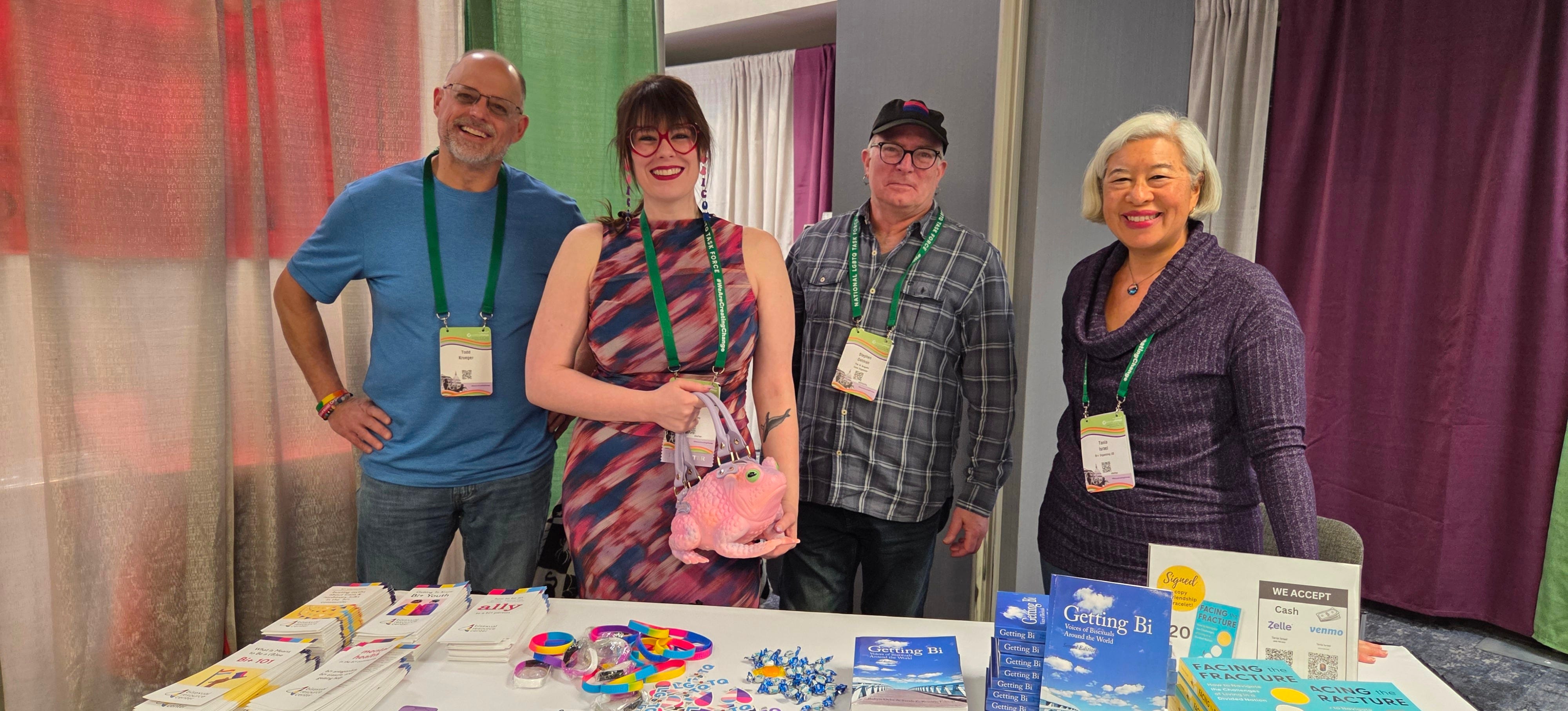
A little after eight, I texted Stephen that I was ready, bag stuffed with Bisexual Resource Center brochures and books. He sent me a booth number, and I got lost trying to find it. In hindsight, this made perfect sense. We hadn’t been assigned a table. We hadn’t been given a booth number. We were, functionally, a rumor.
I dropped the materials at the table—wherever it technically was—and rushed off to a session on leading for social change. I sat next to a stranger wearing a ring in unmistakable bi pride colors. I complimented it, the way you do when you see someone quietly signaling I am like you in a crowded room.
His name was Todd. He’s with the Bisexual Organizing Project in the Twin Cities. He told me he had volunteered for their board after hearing Jace and me speak at BECAUSE in 2024, our first major conference. I had one of those moments that knock the air out of your chest a little: the reminder that you don’t always get to see the impact of your work when it’s happening, but it’s there anyway.
When I made my way back to the booth, Stephen had worked a small miracle. We now had a title card that read BI+ Community Table, though I remain unclear on why the “I” was capitalized. Still, it was something. Proof that we existed.
What became clear very quickly, though, was that most people had no interest in finding us. We were tucked into the dark back corner of the expo hall, and when the occasional unsuspecting passerby stumbled across our table, they’d clock the colors, read the sign, and make a swift exit—as if bisexuality were contagious. For the record, bi+ people do not bite without consent.
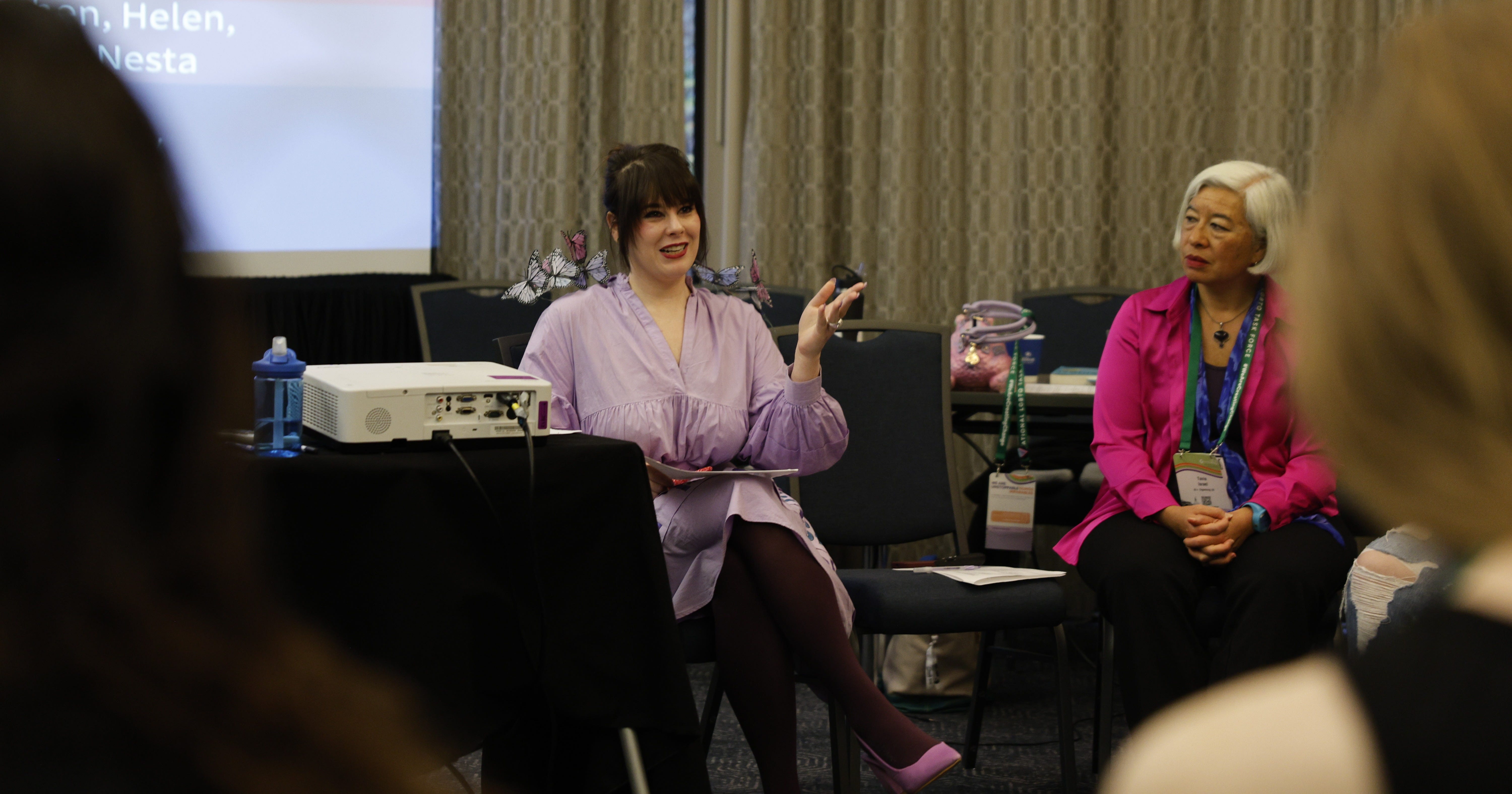
That morning, I was wearing a dress in unmistakable bi pride colors and carrying a small pink purse shaped like a toad. His name is Frederico, and he is objectively delightful. People were obsessed with him. They stopped me to comment, to ask where I got him, to giggle. I realized that Frederico was my “softening factor,” or the thing that made me approachable. Without his whimsy, I’m not sure how many people would have engaged at all.
Later, I went to a session on disability justice and nodded along as the presenter gave a brief but comprehensive history of disability rights in the United States. The word “intersectionality” came up again and again, invoked with care and urgency. And I believed every word of it. I also couldn’t shake the irony of sitting in a room where intersectionality was being rightly championed, while bisexuality—still the largest group under the LGBTQ+ umbrella, lest you forget—remained something people quite literally walked away from.
This is the thing about how they look at us: bisexuality is acceptable in theory, and inconvenient in practice. Interesting, but optional. Worth praising, but not prioritizing. We’re welcome to be here, as long as we don’t ask for too much space, too much time, or too much recognition.
Finding Each Other Anyway
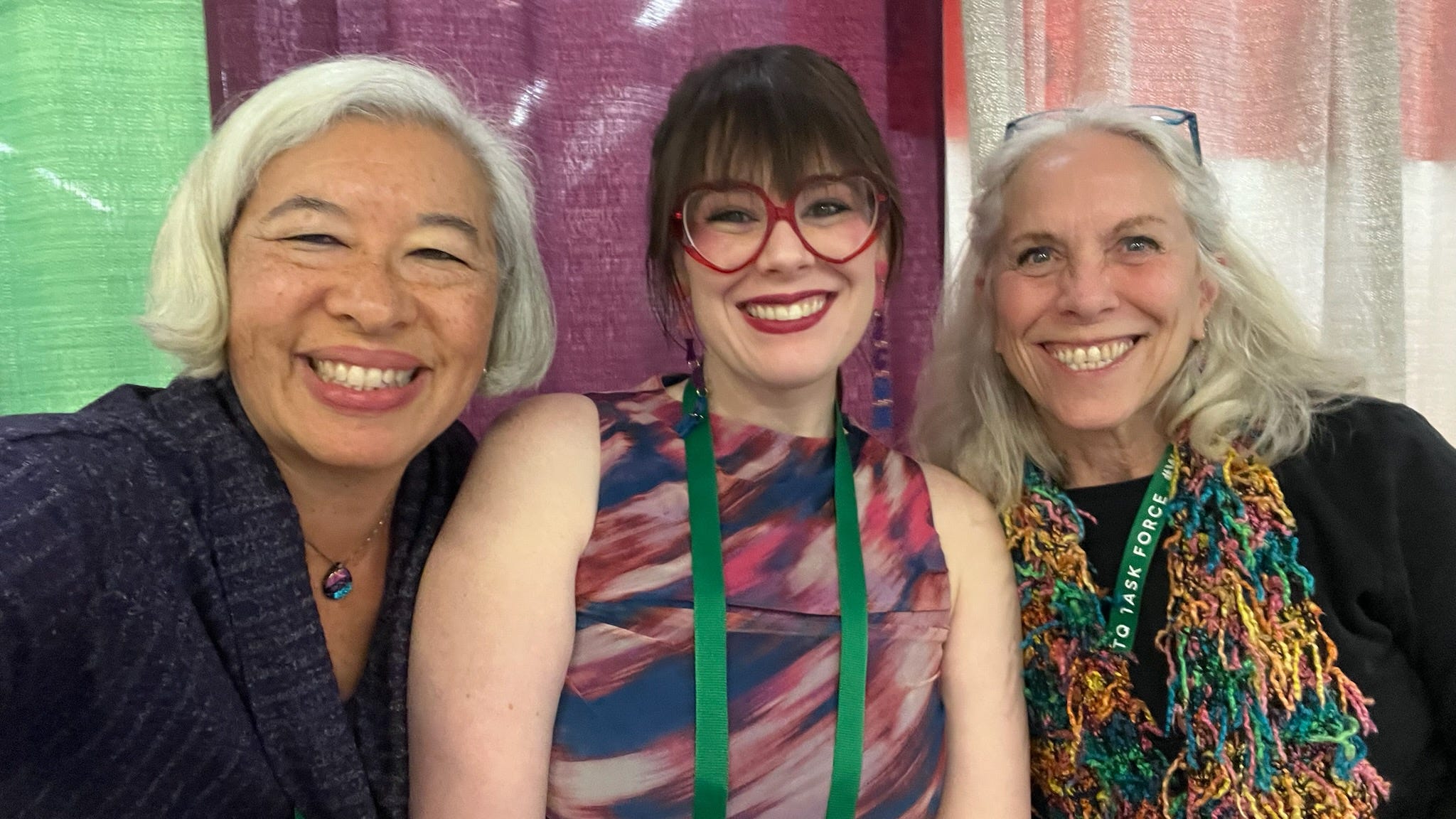
As the morning wore on, more bi+ organizers began to arrive. Tania Israel, newly retired from UC Santa Barbara and now championing BiPlus Organizing US. Sarah Ann from the Bisexual Organizing Project. Robyn Ochs, who needs no elaboration if you are even peripherally bi+. And Wayne Bryant, or “my best friend Wayne,” as I have taken to calling him, a longtime bi+ organizer and former president of the Bisexual Resource Center.
Wayne brought photos of bi+ leaders we’ve lost over the last two years. Among them were personal heroes: Loraine Hutchins and ABilly Jones-Hennin. Sitting with their memories felt like sitting with our dead, like acknowledging a lineage that is too often erased even within queer spaces.
Being at that table was the first time I’d ever been surrounded by so many people who are as deeply committed to bi+ organizing as Jace and I are—if not more so, if we’re being honest. It felt like stepping into a room I didn’t know I’d been missing my whole life.
Then it was lunchtime.
I hadn’t eaten all day. I couldn’t bring myself to justify a $20 breakfast sandwich, and my body was starting to make that everyone’s problem. Tania asked if I wanted to grab a bite with her. I was stunned. Tania Israel is extremely famous to me, and she wanted us to eat together.
Lunch turned into a 90-minute conversation about the future of bi+ organizing, about how desperately we both want to bring energy back into a community that has been running on fumes since the dissolution of BiNet USA not long after the beginning of COVID. She talked about coming into this work later in life, about having no roadmap, no mentor guiding her steps. I realized that we had that in common.
We talked about what it would take to build something connective again. An organization that could link smaller bi+ groups without flattening them the way BiNet had. I told her she needed a buddy. This work cannot be done alone. We praised each other’s focus and commitment, and I won’t lie: I was deeply flattered that Tania Israel thinks I’m cool.
The lunch ($26 for a chicken sandwich!) meant I missed the one other thing I’d hoped to attend that afternoon. But maybe that was okay. Conferences are as much about connection as they are about content, and sometimes the most important sessions happen over food you didn’t plan to buy.
After lunch, the building seemed to shift. People clustered in ways that made it obvious they had histories together; old colleagues, longtime collaborators, friends who’d been meeting up at Creating Change for years. Plans were made quickly and casually. We’re grabbing dinner later. We’re all heading out after this.
No one asked me to dinner. I don’t think it was unkindness. It felt more like momentum. Everyone already moving toward someone else, already folded into circles that had formed long before I arrived. Still, the result was the same. I was alone in a building full of people, acutely aware of it.
I spent the rest of the afternoon back at the booth until things wrapped up at five. When the expo hall emptied, I couldn’t bring myself to leave the hotel. The idea of navigating another crowded space, another unfamiliar street, felt impossible. So I went to the bar and ordered a wildly expensive Caesar salad and a G&T.
Frederico sat on the bar. No one asked what I was here for, or who I was with, or what I was working on. I was just a girl in a pink, purple, and blue dress, eating alone with a frog-shaped purse in a city where everyone else seemed to know exactly where they belonged.
I went upstairs intending to work on my slide deck since our presentation was the next day at 3:30 p.m., but it was no use. My body had reached its limit. I set an alarm for 4:00 a.m. and was asleep by 7:30, wrung out in the particular way that comes from wanting connection and not quite finding it.
Becoming a Bisexual Killjoy (In Practice)
Sometimes I forget that I work better in the morning. I’m medicated, alert, alone with my thoughts. By the time the sun was fully up, the slide deck was in better shape than it had ever been. Now all that was left to do was practice.
I don’t know whether my neighbors heard me, but I spent the next four hours honing the script: putting emphasis in the right places, figuring out how to acknowledge why Jace wasn’t with me without detracting from the revolutionary position that bi+ness represents. I practiced answering questions. I practiced defending the idea that excluding bisexual people from LGBTQ+ spaces is not just a moral failure, but a tactical one: it fractures political power and reinforces the binary systems that thrive on tidy categories, systems that want to know exactly what you’re worth so they can extract value accordingly. Bisexuality disrupts that logic. That’s why it’s inconvenient. That’s why it’s sidelined.
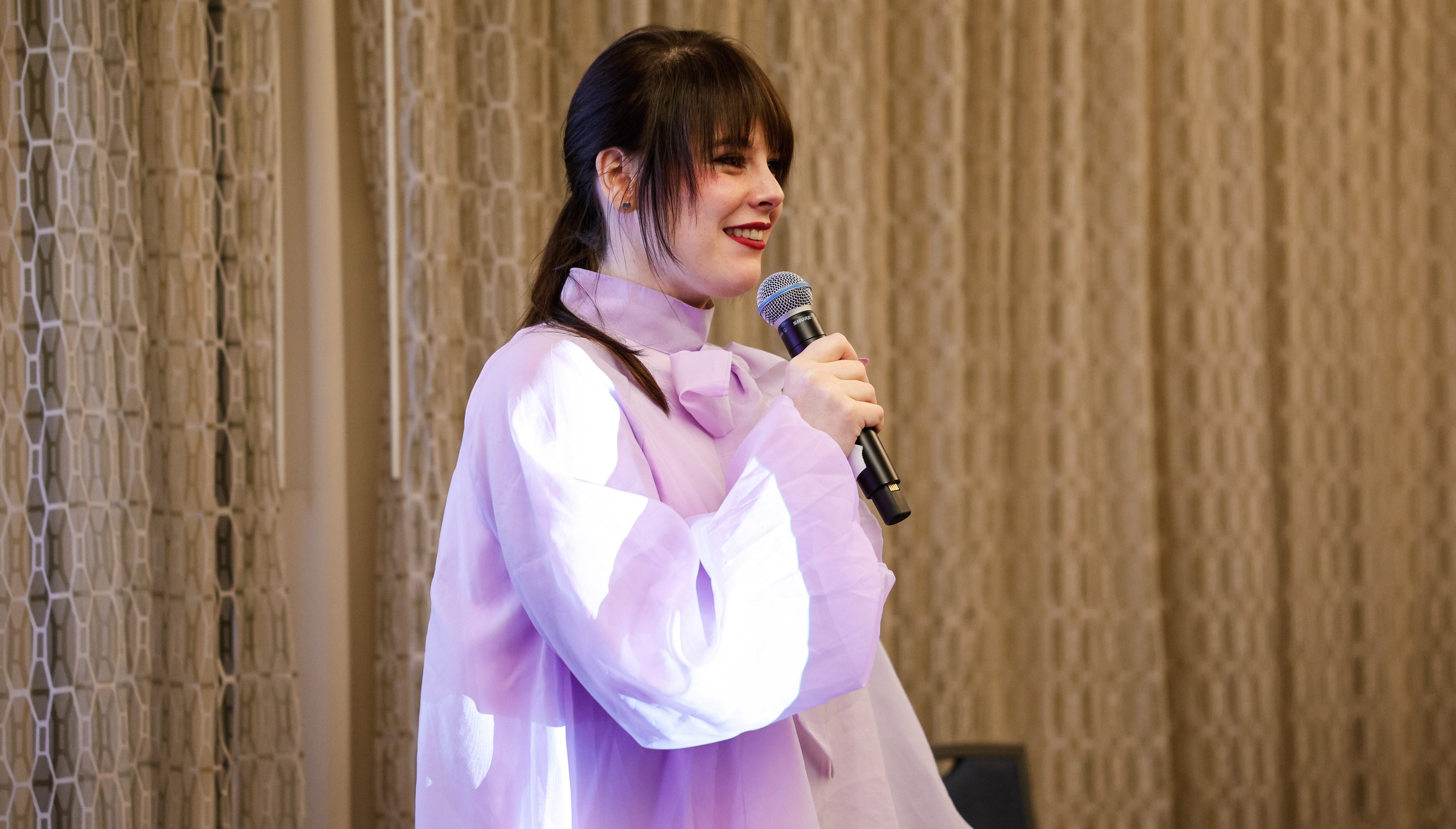
I practiced for Richie on Zoom. I practiced holding a lint roller (roughly the weight of a microphone, as it turns out) and spoke into it until the words felt like muscle memory.
I went downstairs fully intending to attend community events and workshops. In reality, I paced and hovered around the bi+ community table while Stephen, Robyn, Sarah Ann, Todd, and Tania drifted in and out. I was too nervous. I didn’t want to lose my focus. I didn’t eat lunch. The hours slipped by, and suddenly it was forty-five minutes to showtime.
I found the room I’d been assigned. 51 people had RSVPed. My volunteer was already there, which meant I couldn’t properly decompress, but maybe that was for the best. Talking through my nerves was better than sitting alone with them. People arrived early. They took up space. The room warmed.
Five minutes to show. I patted Frederico and remembered Jace telling me to stay calm, that I was going to do a good job.
Two minutes.
One.
And then the performance part of me took over. I stood on legs that felt wobbly but looked steady and launched in. I didn’t rush. My voice didn’t waver. I laid out the realities of bi erasure, knowing full well that the data on health disparities is a hard pill to swallow when you realize what exclusion actually costs people.
We broke into groups. People worked through scenarios: board meetings that exclude bi+ representation, event planning that claims inclusivity but misses the mark, Pride programming where the B gets dropped yet again. The room buzzed. People talked. When we came back together, I could see it on their faces: the recognition that many of them had minimized themselves for years, that they had learned to shrink, and that maybe the B deserved to be remembered a little more often.
And then it was over. I think people clapped. I honestly can’t remember. What I do remember is the small line that formed afterward—conversations about bi+ projects, organizing ideas, and, “Oh, by the way, do you do talks?” It’s a humbling thing to realize you’re a teacher. That you have something to say and that people want to listen.
Not long after, many of the same faces showed up at the Bi+ Caucus. People talked about coming out, relationships, being bi+ and BIPOC, media representation, organizing. This room buzzed, too. For some, I could tell, this was the first time they’d ever been in a space where people simply got it.
It was a good day.
And this time, when the evening came, I wasn’t alone. I went to dinner with Sarah Ann and Todd. We talked about Minneapolis, about organizing, about how hard volunteer boards are to sustain and how easily they fracture. We kept circling the same theme: how desperate we all are for connection, for friendship, for solidarity.
When we got back to the hotel, it was nearly time for the opening cruise, which I learned is not a boat ride (And don’t you dare say that’s because bisexuals aren’t culturally queer. I grew up in the Bible Belt for Christ’s sake). I didn’t go anyway. I was tired again.
What We Carry, What Gets Cut Short
I heard about the blizzard early Friday morning. The kind of storm that snarls airports and strands people for days. I lay there doing the mental math: whether I should change my flight, whether I could afford to stay an extra day or two, whether it was worth it.
I felt sick about the idea of leaving early. Our community paid good money to get me to this conference. But staying longer would mean fewer dollars redistributed afterward, fewer donations to other bi+ organizations. In the end, Richie switched my flight for me. It was the practical choice. It still didn’t feel good.
I put on the community dress—the one we created for the campaign. The donors’ names printed across the fabric in painstaking brushstrokes, butterflies stitched to the shoulders. I felt proud. Grounded. Like I was carrying people with me.
When I went downstairs, heads turned (you know you did something right when a drag queen says “I see you, pageant”). Folks stopped me to say how beautiful the dress was, and then their delight doubled when I told them why I was wearing it. That felt like the point: visibility not as spectacle, but as gratitude.
As the day went on, I learned more people were changing their flights. Robyn was on the phone for an hour and half to switch hers to Saturday morning. I felt the time narrowing. The Bi+ Institute loomed. And why not? It’s a six-hour intensive meant to take stock of the state of bi+ organizing on a national level.
There were six of us on the panel: Nesta, a lawyer and organizer I’d never met in person before this conference and a truly elite pun artist; Robyn; Stephen; Tania; me; and Helen, former board member of the Bisexual Resource Center and now with Lambda Legal (thank you for your service).
We were ready. We each had areas of expertise, histories, questions we wanted to dig into. Around 50 people had RSVP’d. 10 showed up.
Creating Change had scheduled all of the institutes at the same time. The Trans Institute ran concurrently with the Bi+ Institute, as if a third of that population didn’t also identify as bi+. So much for intersectionality.
It was a long day. One of those days that leaves you feeling like you’re covered in ants by the end. I couldn’t stop thinking about what might have happened if people had been allowed to move between institutes, to exist in more than one place at once, the way real people do.
By the end, I wasn’t sure we needed an institute at all. Maybe what we need are more workshops, more caucuses, more spaces that intentionally overlap; spaces that let people explore identity and solidarity without being forced to choose one axis of themselves over another.
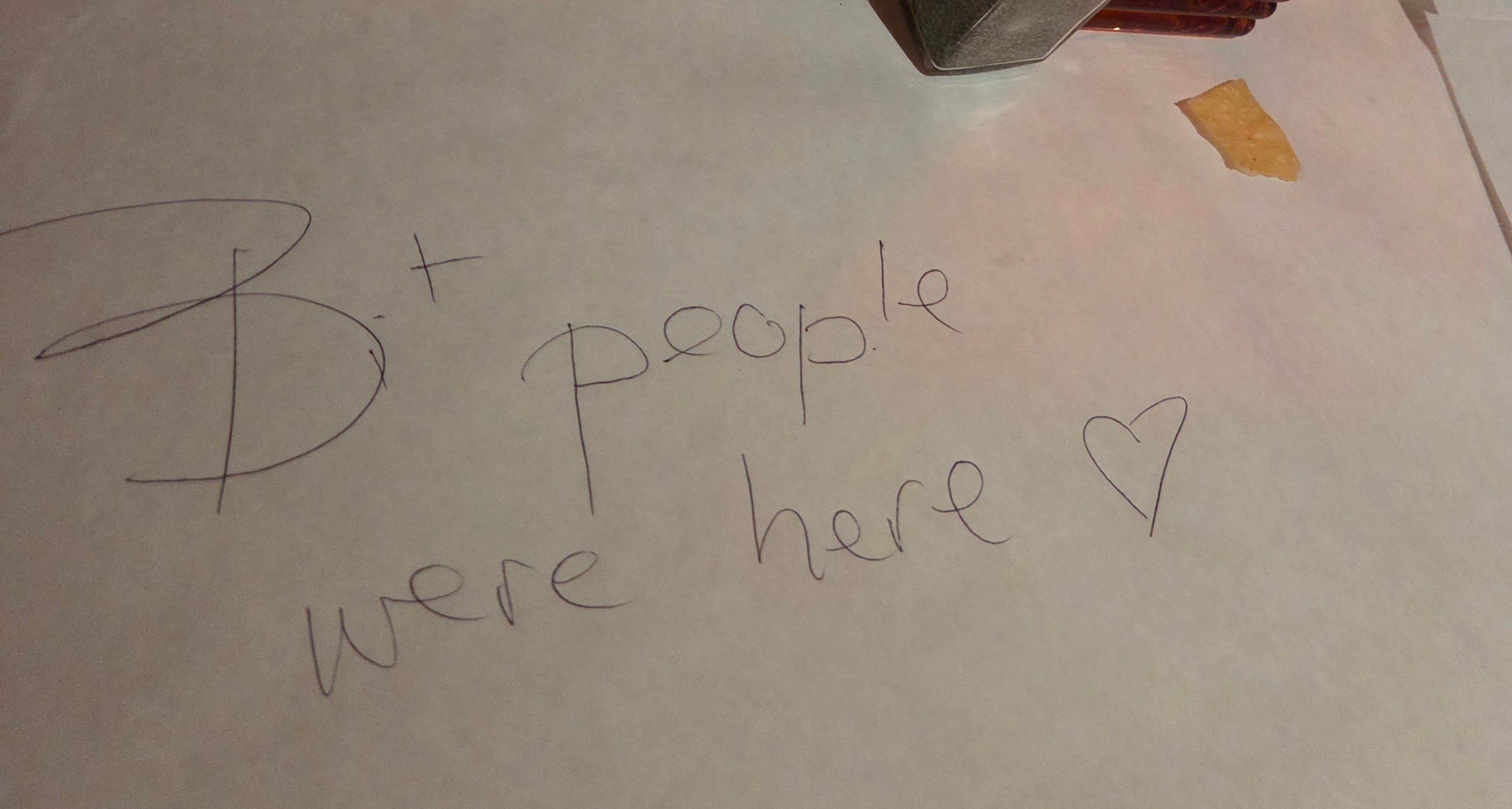
We were exhausted. A little demoralized. But still bolstered by each other. Most of us found our way to a Tex-Mex place that was used to big parties. We shared pitchers of frozen margaritas, chips and salsa, laughter. We talked and learned and decompressed together.
When the bill was paid and I’d figured out what everyone owed me, I wrote on the butcher paper covering the table: Bi+ people were here.
Because we were.
The next morning, the expo hall was nearly empty. Our table had been moved closer to the front. Those of us who remained talked about how to stay in touch, how to keep this energy from dissipating once we scattered back to our corners of the country. There was something here that wanted a home. That wanted continuity.
When I left for the airport, I found myself thinking: Please let this reinvigorate the movement.
What We Do With What We’re Given
Before I left for Creating Change, we budgeted $2,000. That number stayed with me the entire week: every skipped meal (not that I didn’t eat on purpose, I promise), every flight decision, every calculation about whether staying longer was worth the cost. I was the one physically there, but I didn’t go alone. I carried the trust of this community with me, and that carries responsibility.
I stayed within budget. I came home exhausted and emotionally wrung out. And now, we have $800 to give away.
That money will be redistributed to bi+ organizations doing the necessary work of sustaining our movements. This matters to us. It matters that attending national conferences doesn’t drain the communities that make this work possible. It matters that visibility doesn’t come at the expense of care.
Right now, we’re planning to donate to the following organizations, and we’re open to additional recommendations from the community:
If there are other bi+ organizations that should be part of this redistribution, we want to hear about them.
I want to be clear about something else, too: Creating Change mattered. Even though I was overwhelmed. Even though I was lonely at times. Even though my nervous system was shot by the end of most days. It mattered because bi+ people were there. Because we spoke. Because we gathered. Because we were visible not just as individuals, but as organizers with history, analysis, and demands.
But visibility alone isn’t the goal.
What I’m thinking about now—unpacking my bag, putting Frederico back in the closet—is how we get more bi+ people into these rooms. How we get more abstracts accepted. How we move from novelty to necessity. How we stop treating bisexuality as optional within queer liberation and start treating it as what it is: a destabilizing force that refuses tidy categories and asks harder questions about power, belonging, and worth.
Bisexuality makes people uncomfortable because it doesn’t resolve cleanly. It can’t be easily sorted. It disrupts systems that depend on binaries to function efficiently. That’s exactly why it belongs at the center of movement work, not the margins.
Being a Bisexual Killjoy isn’t about being loud for the sake of it. It’s about insisting that we count. That our labor counts. That our communities count. That redistribution, accountability, and care are not afterthoughts, but core strategy.
I was the one who went. But I didn’t go without Jace (who helped shape every slide and reminded me, again and again, to stay steady) or without the community that trusted me to show up on its behalf.
Bi+ people were there.
xoxo,
Bailey
Love it! It sounds like an amazing, exhausting experience. Thanks for posting the list of orgs to support.
And before you put him away, Frederico deserves to be out of the closet just like the rest of us. Don’t cage him in!!
YOU WERE AMAZING IN THE SESSION. Truly. I’m so glad I got to attend, and I’m so sorry we didn’t get a meal together—generally, but especially now that I read how you were feeling! I also find conferences overwhelming and exhausting. Volunteering was great, but tough in its own way… Next year, and beyond, and before: please know I’m on your team and want to know you more and want to help bolster the bi+ movement! Cannot wait for another bisexual killjoy talk in Louisville. 🩷💜💙